EN
EN


How to Pick a Sturdy Locker Cabinet for Warehouse Use?
In the world of logistics and manufacturing, warehouse organization is the backbone of a successful operation. A high-quality locker cabinet is far more than a furniture piece; it is an essential tool for secure storage and streamlined inventory management. Substandard cabinets are prone to warping, corrosion, and structural failure long before their expected lifespan ends, creating significant safety hazards for both personnel and inventory. Selecting a truly durable warehouse locker requires a keen understanding of materials, precision manufacturing, engineered structural design, and international quality certifications.
The Bedrock of Industrial Durability
The strength of any locker cabinet begins with its raw materials. For heavy-duty industrial environments, cold-rolled steel is the gold standard. Steel thickness is a critical metric; for maximum impact and deformation resistance, high-quality cabinets should utilize steel sheets with a minimum thickness of 0.5mm (standard gauge). Industrial-grade steel cabinets must comply with rigorous tensile and bending resistance standards, such as GB/T 3325-2017 for metal furniture, ensuring they can withstand the rigors of a high-traffic warehouse. For example, a client in the Philippines previously struggled with wooden storage units that buckled under the region's intense humidity and the sheer weight of stored goods. By switching to cold-rolled steel lockers, they eliminated issues with mold, warping, and collapse, significantly extending the service life of their storage infrastructure. The inherent density and toughness of cold-rolled steel make it the only logical choice for demanding warehouse applications.
Advanced Coating Technology for Long-Term Resilience
Warehouses are often unforgiving environments characterized by humidity, dust, and airborne particulates. Consequently, the surface treatment of a locker is vital to its longevity. Premium lockers utilize a double-sided powder coating process with a thickness of at least 100μm. This creates an impermeable protective barrier that seals the steel from air and moisture. Furthermore, phosphate-free electrostatic spray technology—a staple of high-end industrial cabinetry—enhances coating adhesion while remaining environmentally responsible. In standardized neutral salt spray tests, a high-performance finish should achieve a "Class 0" rating for blistering, rusting, and cracking. This level of corrosion resistance ensures the cabinet maintains its integrity for over five years in humid conditions, effectively slashing long-term maintenance costs.
Engineered for High-Capacity Load Bearing
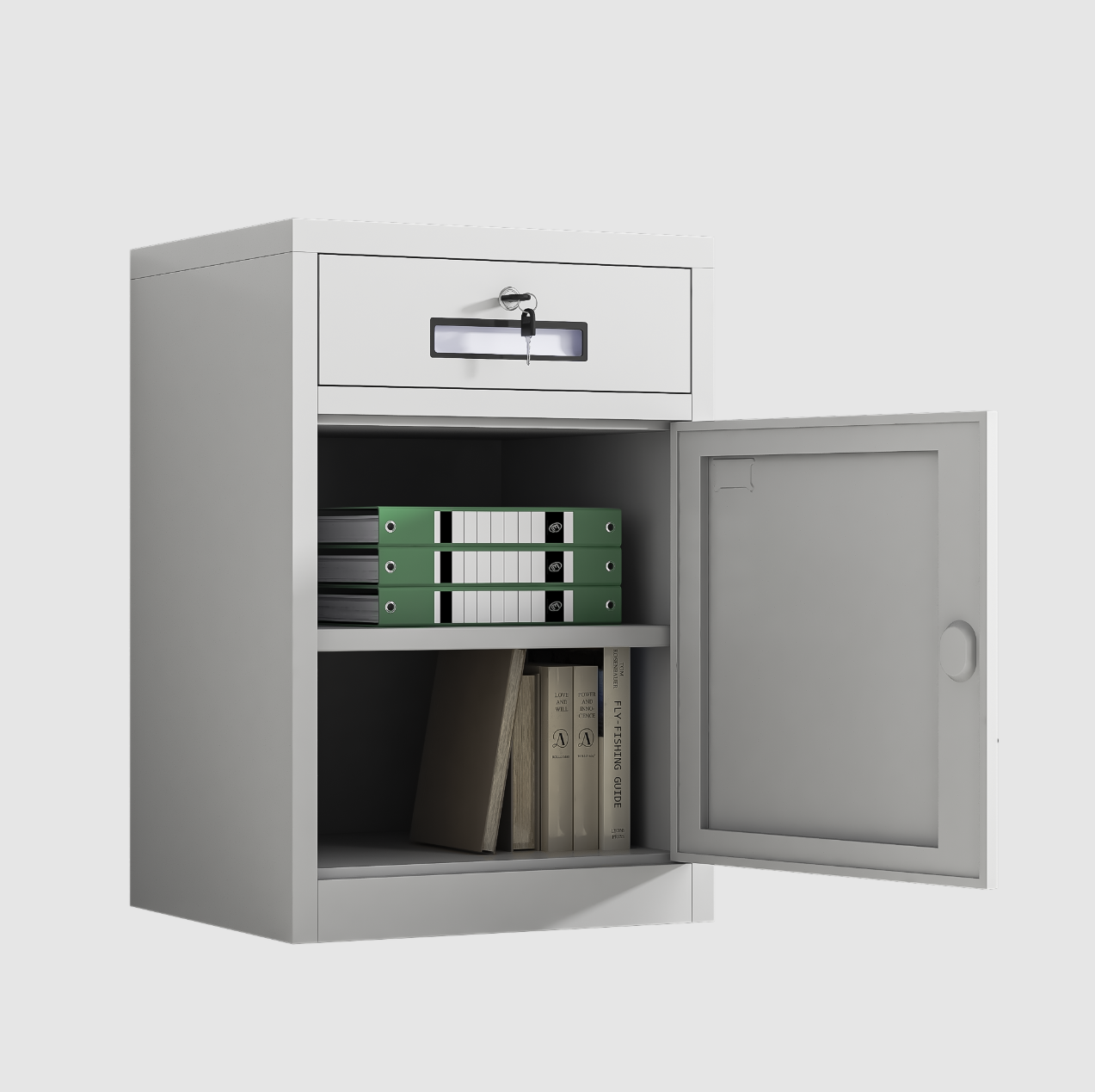
To achieve optimal stability, heavy-duty materials must be paired with precision engineering. Warehouse lockers must prioritize functionality, particularly through adjustable shelving. This modularity allows managers to customize internal layouts to accommodate varying item sizes, maximizing vertical space and operational efficiency. A standard heavy-duty locker should support a single-layer load of 35kg to 50kg (approx. 77lbs to 110lbs), while premium models can support up to 180lbs per shelf—perfect for heavy industrial components and raw materials. Structural integrity is further bolstered by reinforcing ribs and single-pass roll-forming procedures, which distribute force evenly and prevent "cabinet creep" or deformation under full loads. Security is also a structural priority; top-tier locking mechanisms feature a failure rate of less than 1/10,000, ensuring that inventory remains secure and mitigating the risk of loss due to mechanical malfunction.
Rigorous Standards and Quality Certification
Certifications serve as a benchmark for quality and provide buyers with essential peace of mind. Leading manufacturers subject their products to international inspections to validate their durability claims. Look for suppliers who hold ISO9001 (Quality Management), CE, and RoHS certifications, which guarantee adherence to safety and environmental sustainability standards. These credentials indicate that the manufacturer follows strict guidelines in raw material selection and sustainable production. Beyond the paperwork, a "five-star customer support" rating indicates that the manufacturer stands behind their product, ensuring that any operational issues are resolved quickly to keep your warehouse running smoothly. A certified product ensures you won't deal with the headaches of misaligned shelves or doors that refuse to close properly.
Real-World Impact on Operational Efficiency
Investing in robust locker cabinets is a strategic move that enhances both safety and the bottom line. With a lifespan of 5 to 10 years, high-quality steel lockers eliminate the cycle of frequent replacements, keeping capital expenditures low. Professional manufacturers can often provide bespoke solutions tailored to the specific dimensions of your facility, including multi-door configurations that optimize every square inch of floor space. For large-scale expansions, look for manufacturers with high-volume delivery capabilities—such as the ability to produce 4,500 units in 30 days via digital production management. This scalability is crucial during peak production periods. Ultimately, a well-chosen locker system streamlines retrieval times, improves organization, and bolsters the overall efficiency of the enterprise.
Summary
When choosing a warehouse locker, the decision should be guided by four pillars: material quality, protective processes, structural engineering, and verified certification. By focusing on cold-rolled steel thickness, advanced coating technology, and load-bearing capacity, businesses can secure a storage solution that withstands the test of time. A high-quality locker is not just a box for storage; it is a critical investment in workplace safety, cost reduction, and long-term operational success.